Los Disparates (Proverbs) — Francisco de Goya (Complete Series, 18 Plates)
A complete and intact set offered as a single acquisition, documented through coherent technical evidence. The series presents consistent laid-paper supports, clearly preserved intaglio relief, stable and homogeneous line morphology, and shared condition markers that confirm long-term physical unity. The material integrity of the group, combined with its completeness, positions the set as a rare, market-ready ensemble rather than an assemblage of individual impressions.
TECHNICAL DATA
- File ID
- AC-FG-248-REV-2026
- Artist
- Francisco de Goya (1746–1828)
- Title
- Los Disparates (Proverbs)
- Number of plates
- 18
- Set
- Complete series
- Date of Execution
- About c. 1864
- Technique / Materiality
- Intaglio engraving laid paper.
- Sheet Dimensions
- Height 300 mm × Width 430 mm
- Sheet Weight
- 20-21 grams (measured individually)
- Collection
- The Álvarez Collection
- Provenance
- Private family collection, preserved over generations
Research Objective
Technical documentation of the complete set through direct material observation: paper structure (laid pattern and chain lines), ink–fiber interaction, plate mark under raking light, line morphology under macro/microscopy, tonal construction mechanisms (dense hatching and selective burr), comparative overlay analysis, and observation of organic degradation phenomena.
Scope of the Present Study
The present Print Verification Record (PVR) documents a complete set of 18 plates corresponding to the same historical printing campaign of Francisco de Goya’s Los Disparates. This study focuses exclusively on the 18 artistic plates that comprise the complete visual corpus of the series. The absence of the historical title page does not affect the technical analysis of the etchings, as the forensic evidence of unity is found within the plates themselves. The set is analyzed as a coherent technical unit, printed under homogeneous material conditions. The adopted approach responds to the very nature of serial chalcographic printing, where relevant evidence lies not in anecdotal variations between sheets, but in the structural consistency of the set. The examination was conducted through comparative macroscopic and micrographic observation, focusing exclusively on visible material evidence: line structure, chalcographic relief, ink behavior, and paper response to printing pressure. No stylistic or historical interpretations external to the work are formulated. All conclusions are based solely on observable physical characteristics.
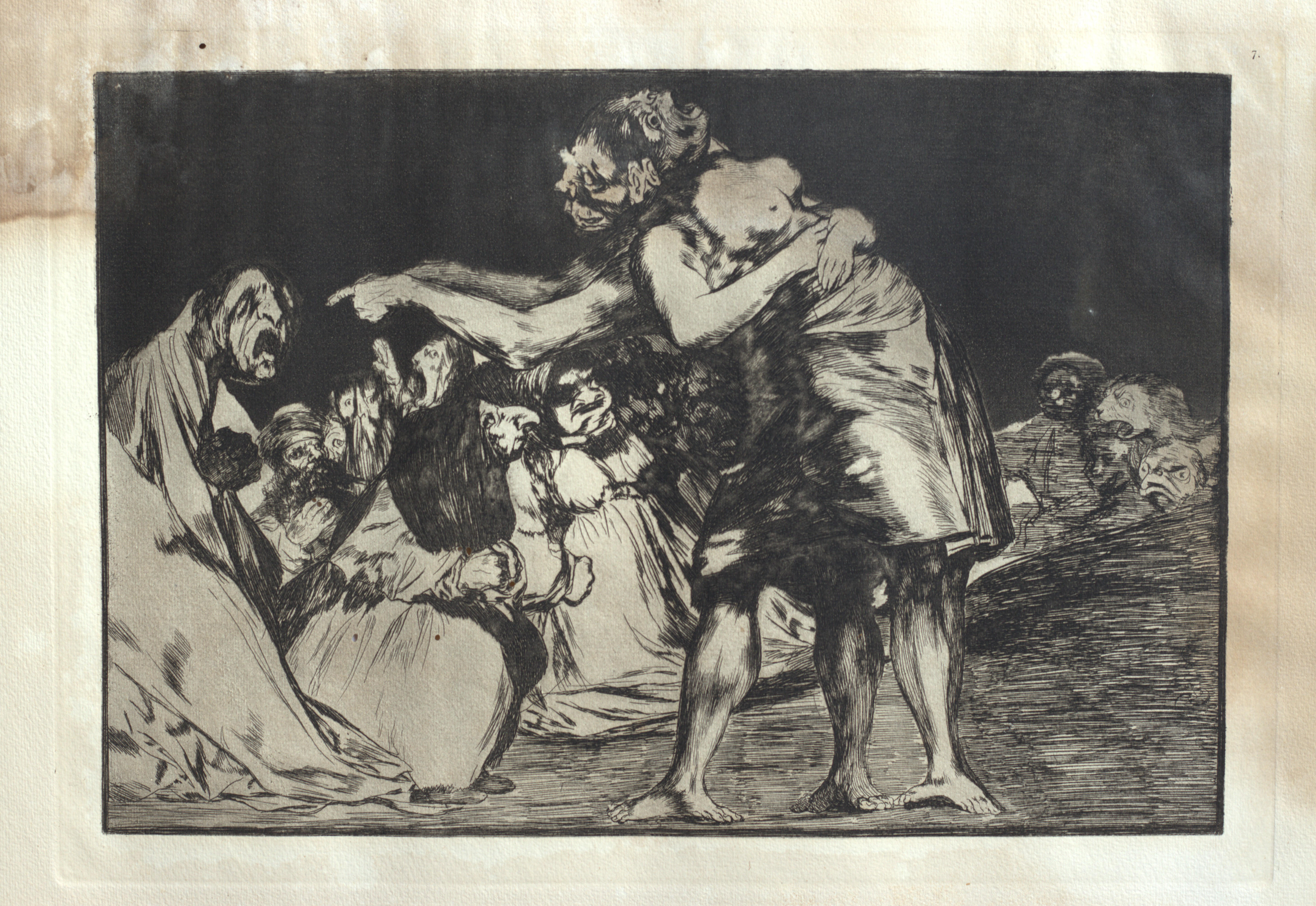
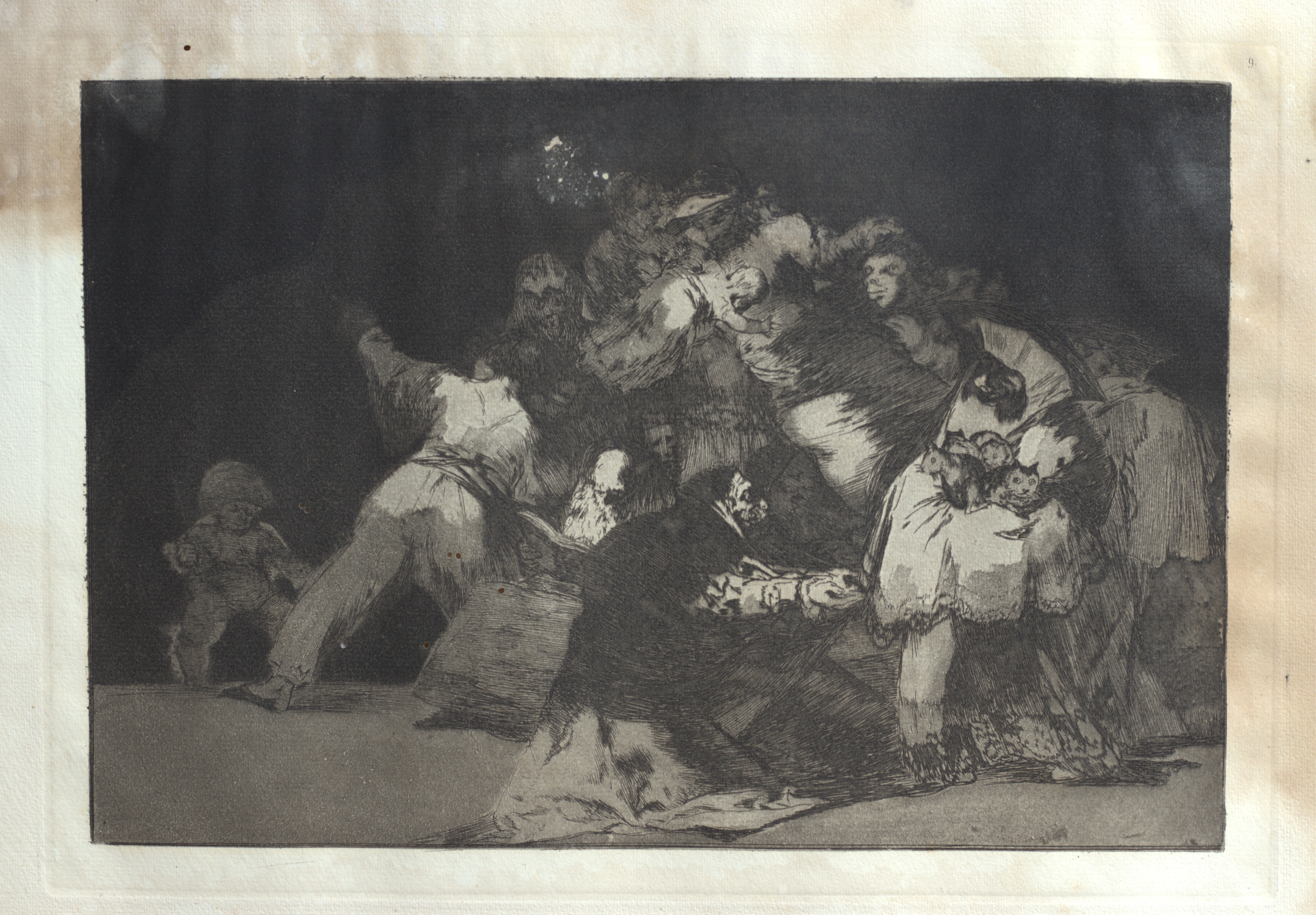
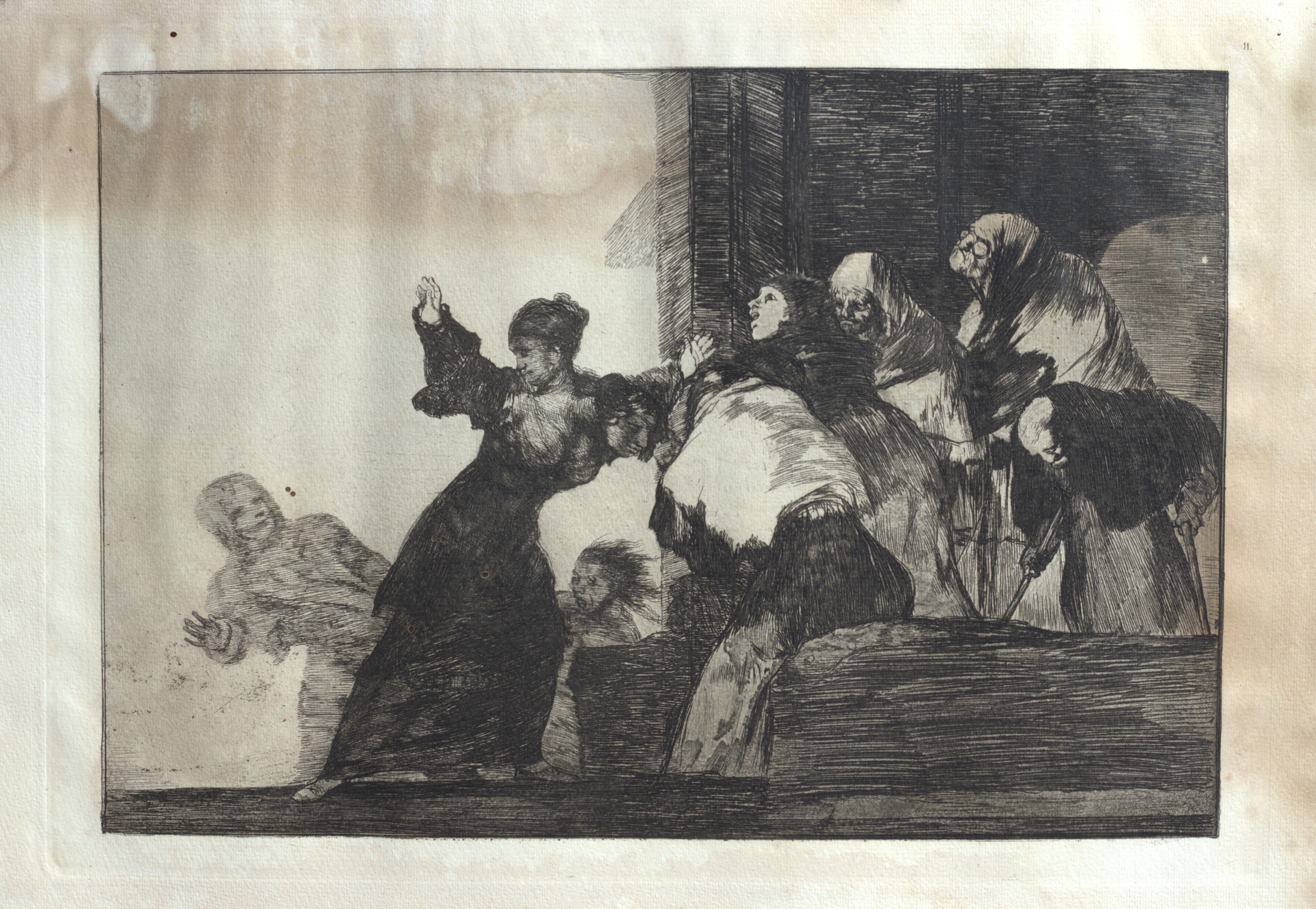
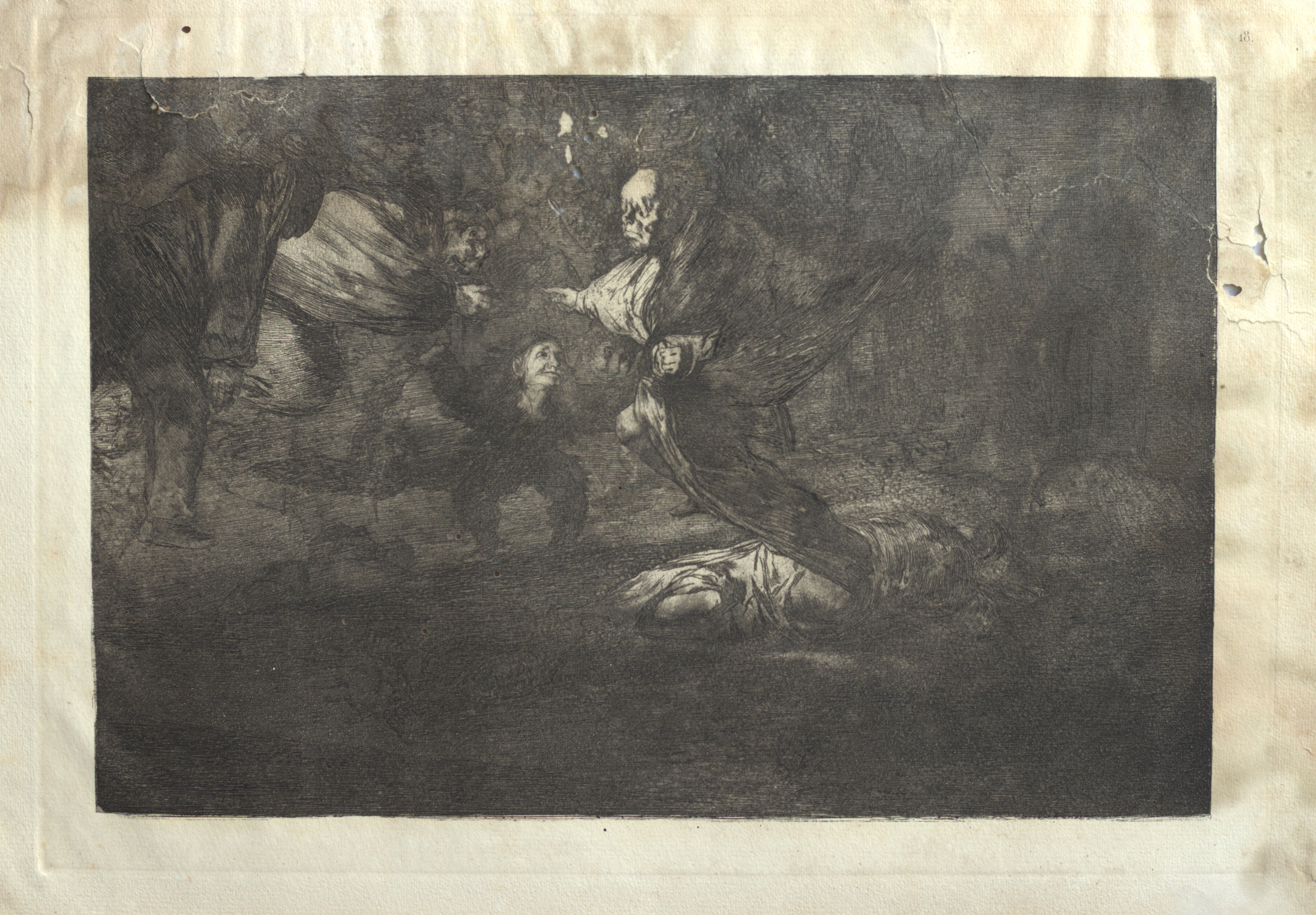
General View of the Set — Complete Series, 18 Plates
Los Disparates (also known historically as Proverbios) is one of the last graphic series conceived by Francisco de Goya between approximately 1815 and 1823. The series was never published during the artist’s lifetime and remained unpublished until its first Academic edition in 1864, issued by the Real Academia de Bellas Artes de San Fernando.
The engravings are characterized by their nocturnal atmosphere, complex visual language, and technical sophistication, combining etching, aquatint, drypoint, and burnishing. Due to political repression during the reign of Ferdinand VII, Goya retained the copper plates, which remained in private custody until their acquisition by the Academy in 1862. The Academic edition of 1864 represents the first authorized public dissemination of the series.
All eighteen plates presented here were printed with constant technical homogeneity. Joint observation of the complete set establishes that all sheets respond to the same material printing logic, without technical ruptures, changes in execution, or structural alterations between them. This coherence is repeatedly manifested in the line structure, the depth of the strokes, the clearly perceptible chalcographic relief, and the uniform behavior of the ink on the paper support.








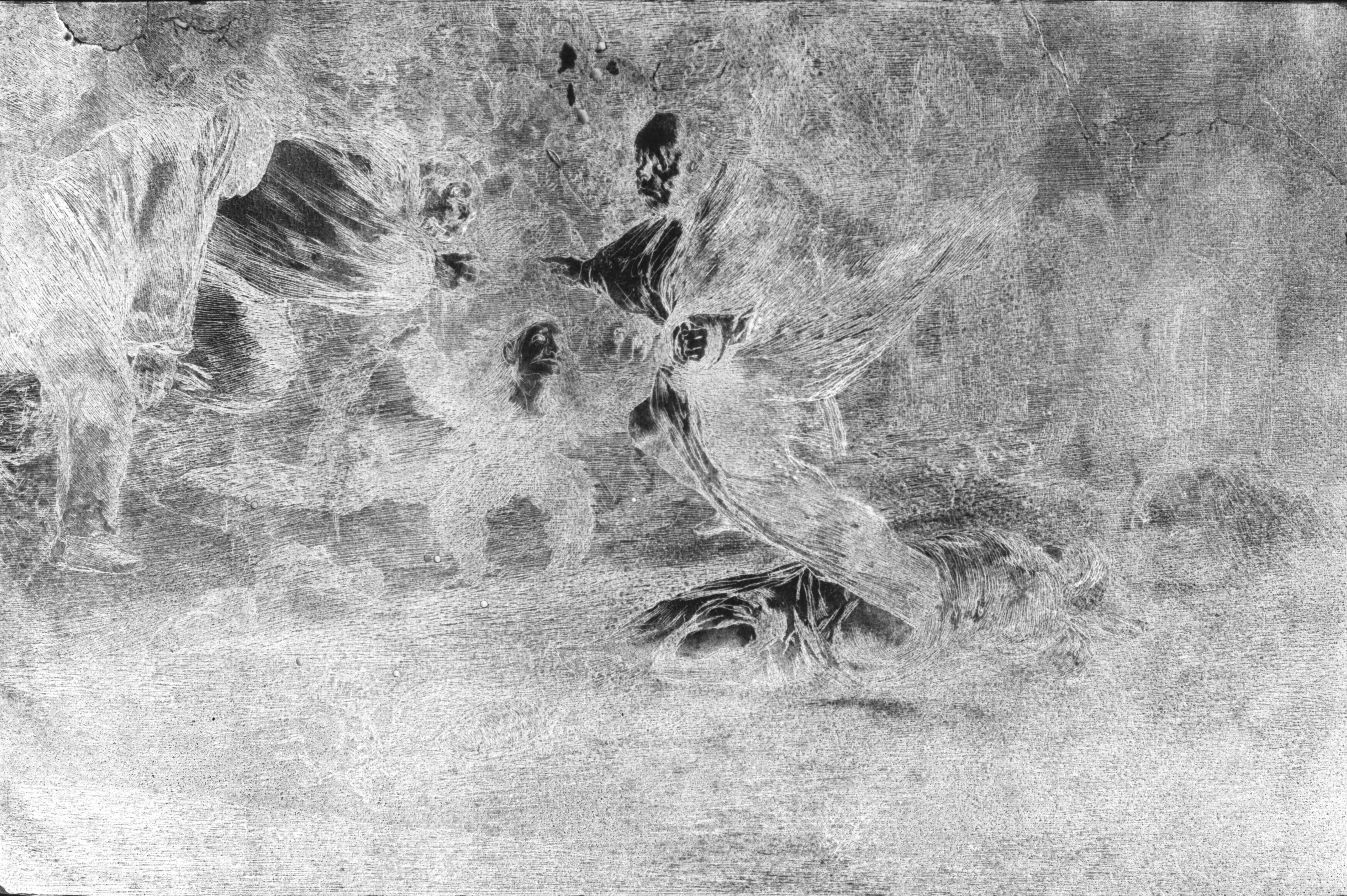
Material Evidence of Print Run Unity and Provenance
The present series preserves a rare and coherent set of physical indicators that collectively demonstrate its integrity as a single, unified printing campaign and its uninterrupted provenance as a complete block.
Evidence of homogeneous print run
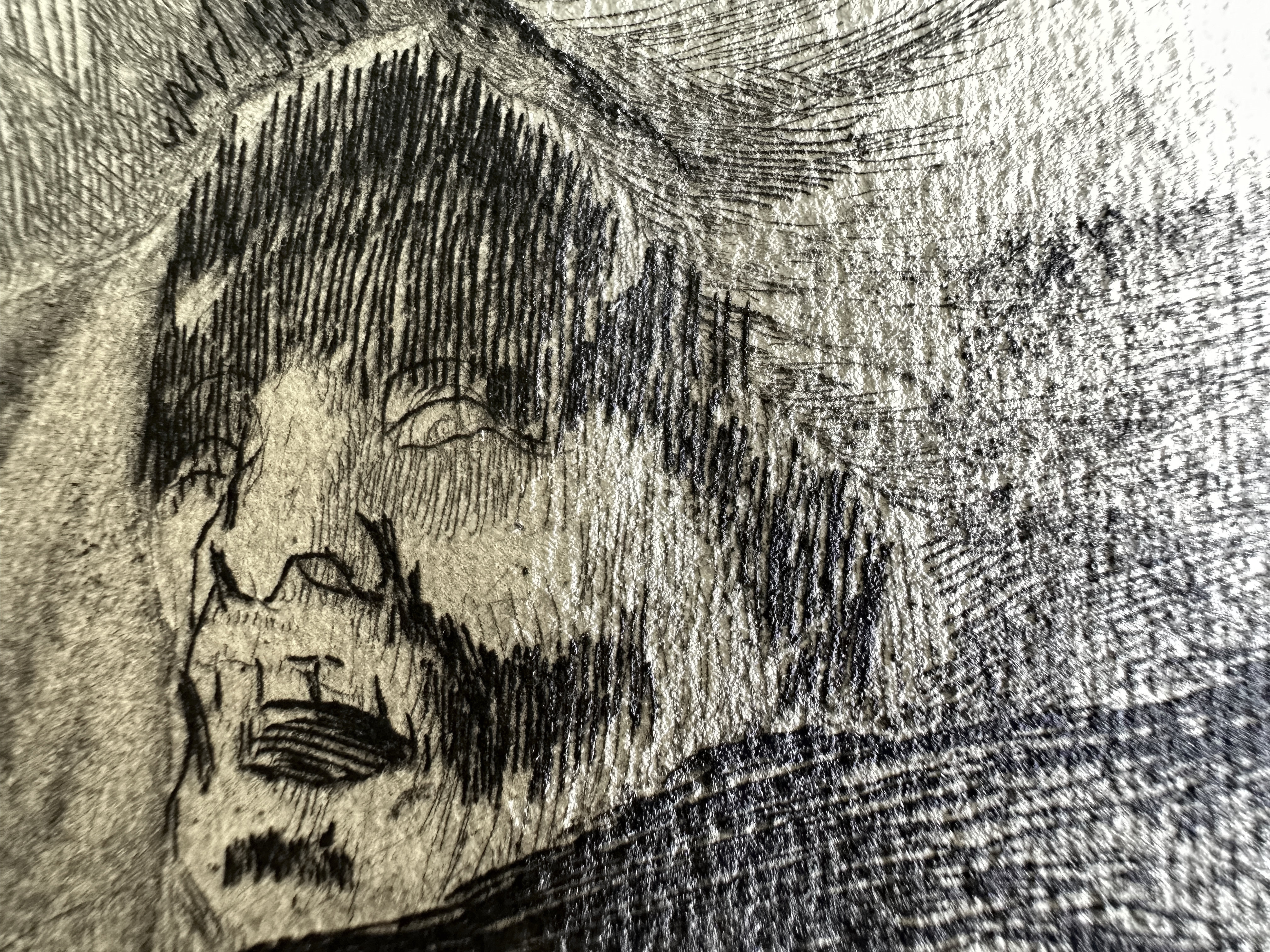
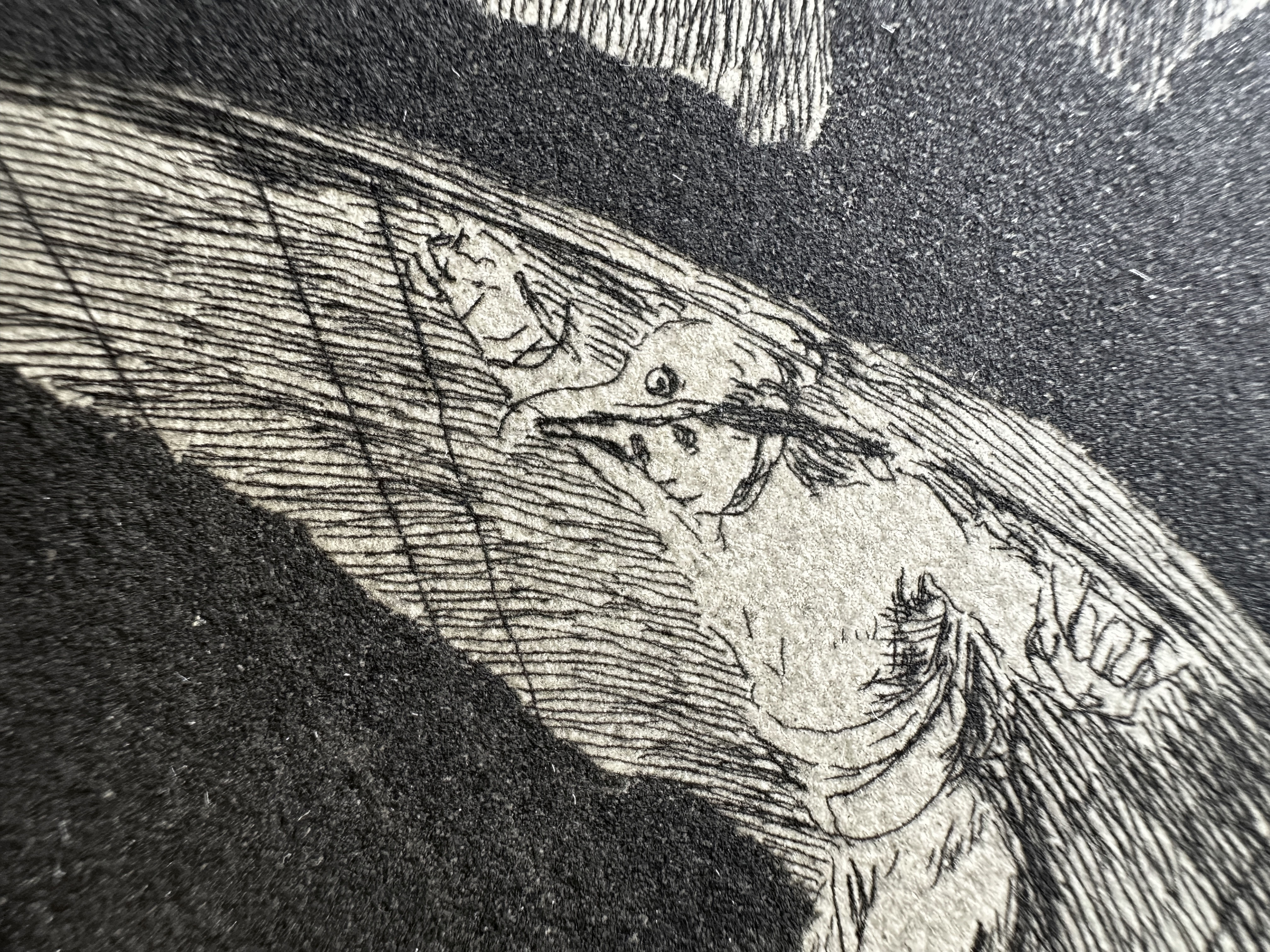
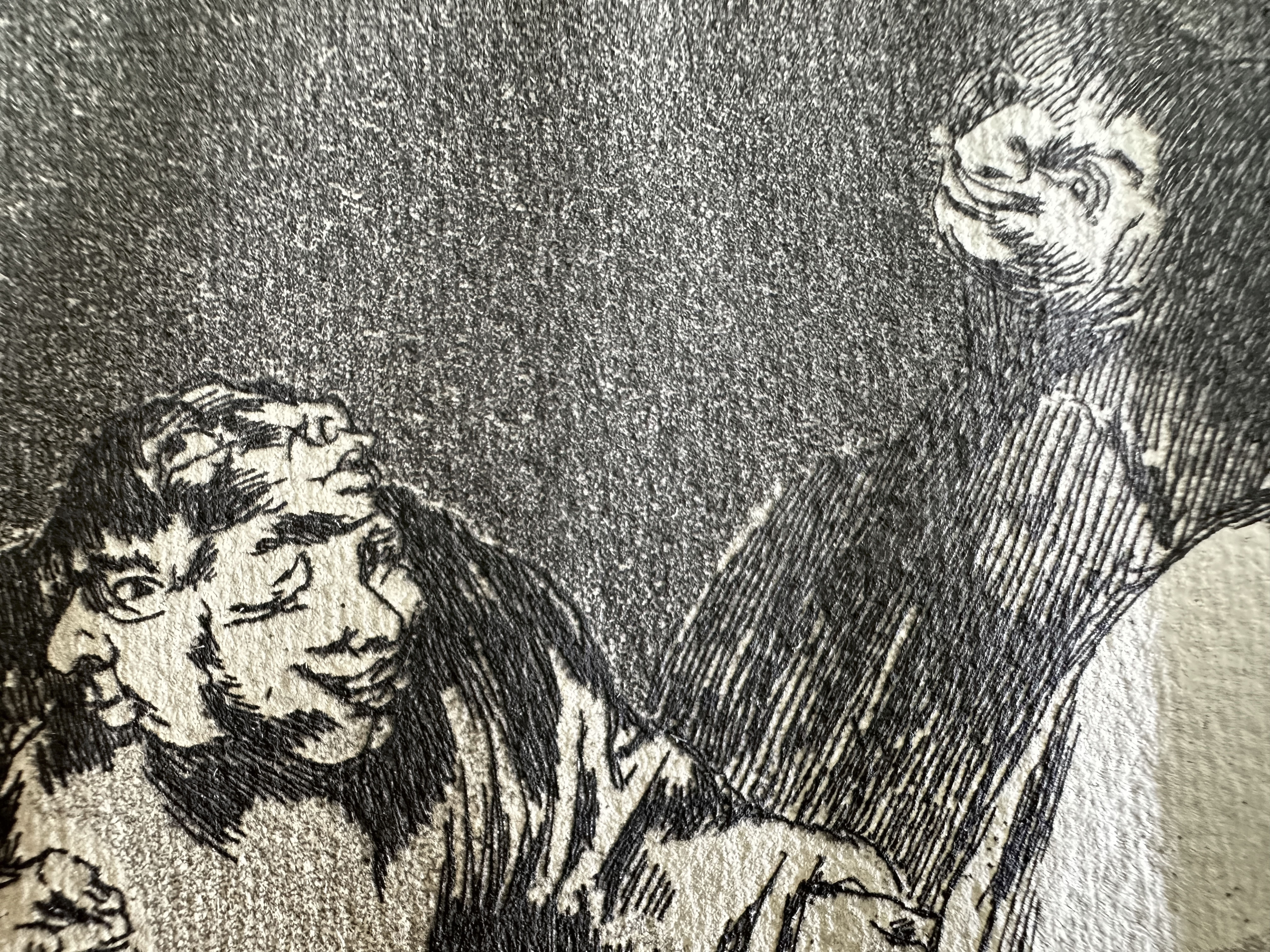
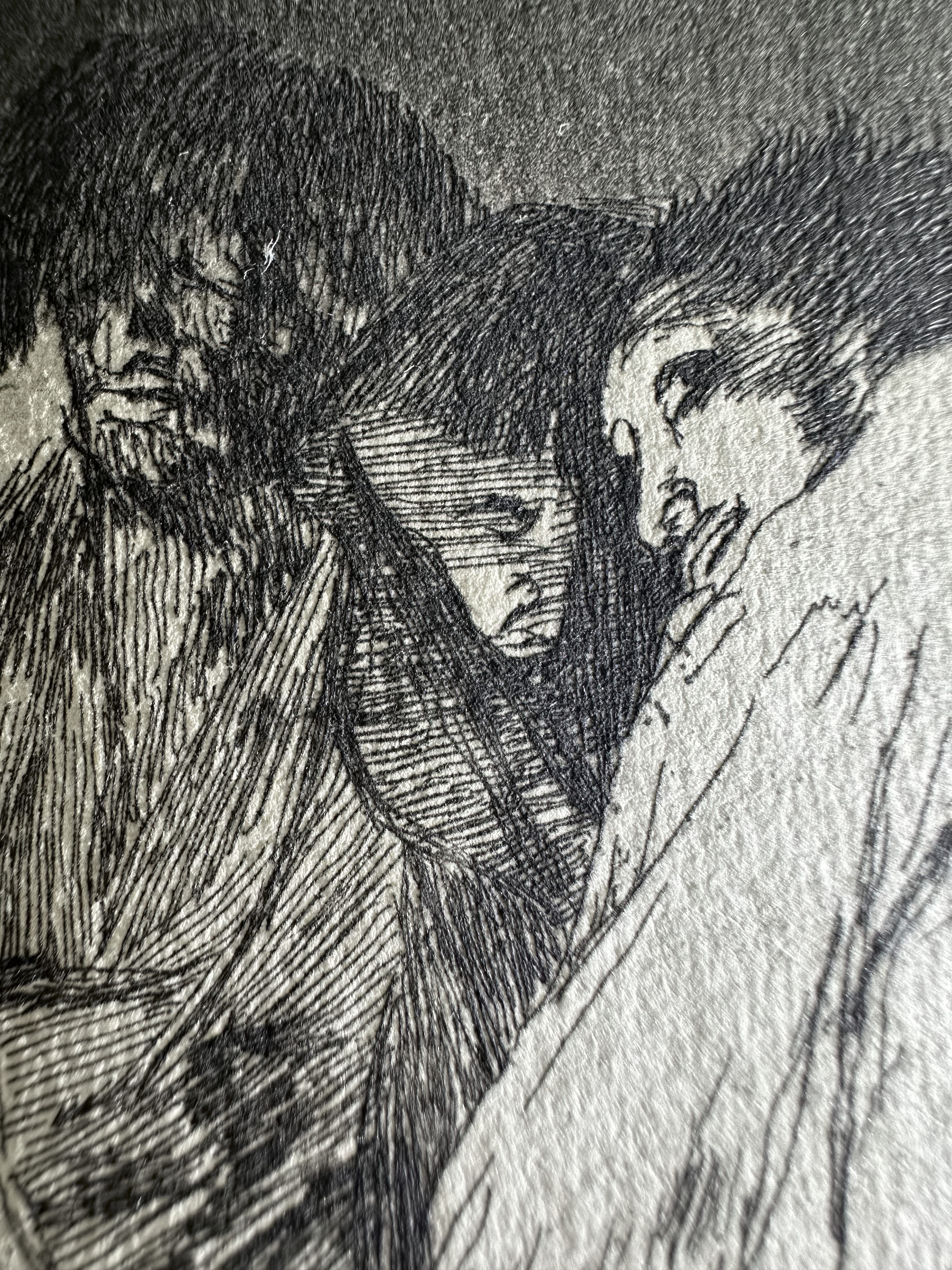
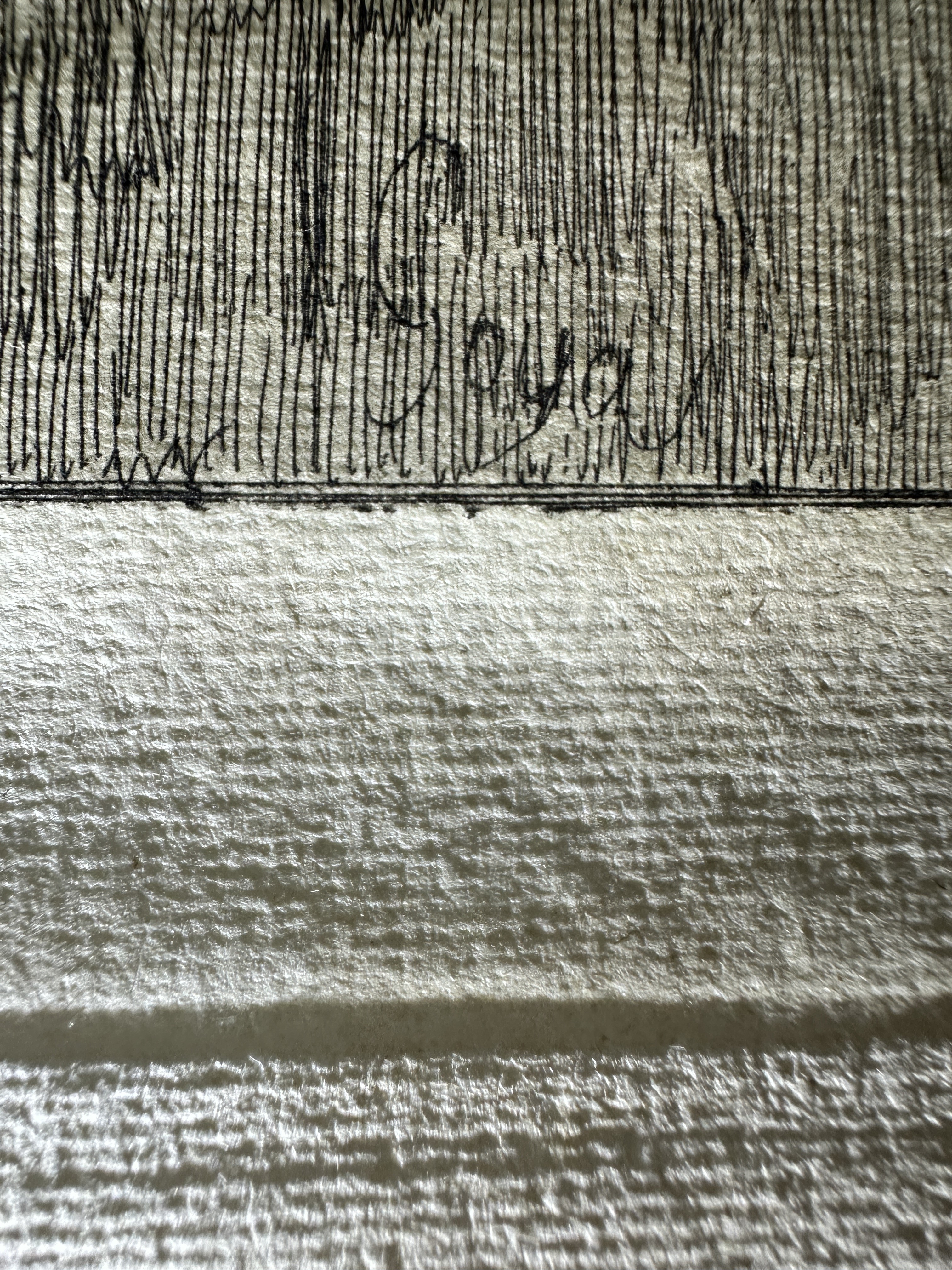
Close macrographic and micrographic examination across all eighteen sheets reveals a striking consistency in line morphology, ink response, and surface relief. Each impression exhibits a pronounced and well-preserved chalcographic relief, with crisp edges and fully articulated incised channels.
This level of uniformity confirms that the plates were printed within a narrow chronological window, at a moment when the copper surfaces remained fully active and uncompromised. No evidence of progressive plate wear, relief flattening, or loss of definition is observed between sheets—features that would inevitably appear in impressions pulled across separated or extended printing campaigns.
The sustained sharpness of the engraved lines, the stable depth of the incisions, and the identical behavior of the ink within the grooves establish that the series was produced as a single, coherent print run rather than as an assemblage of impressions printed at different times.
From a collecting standpoint, this homogeneity is critical: it confirms that the set has not been later recomposed, upgraded, or selectively assembled, but has remained materially intact since its origin.


Technical numbering typography
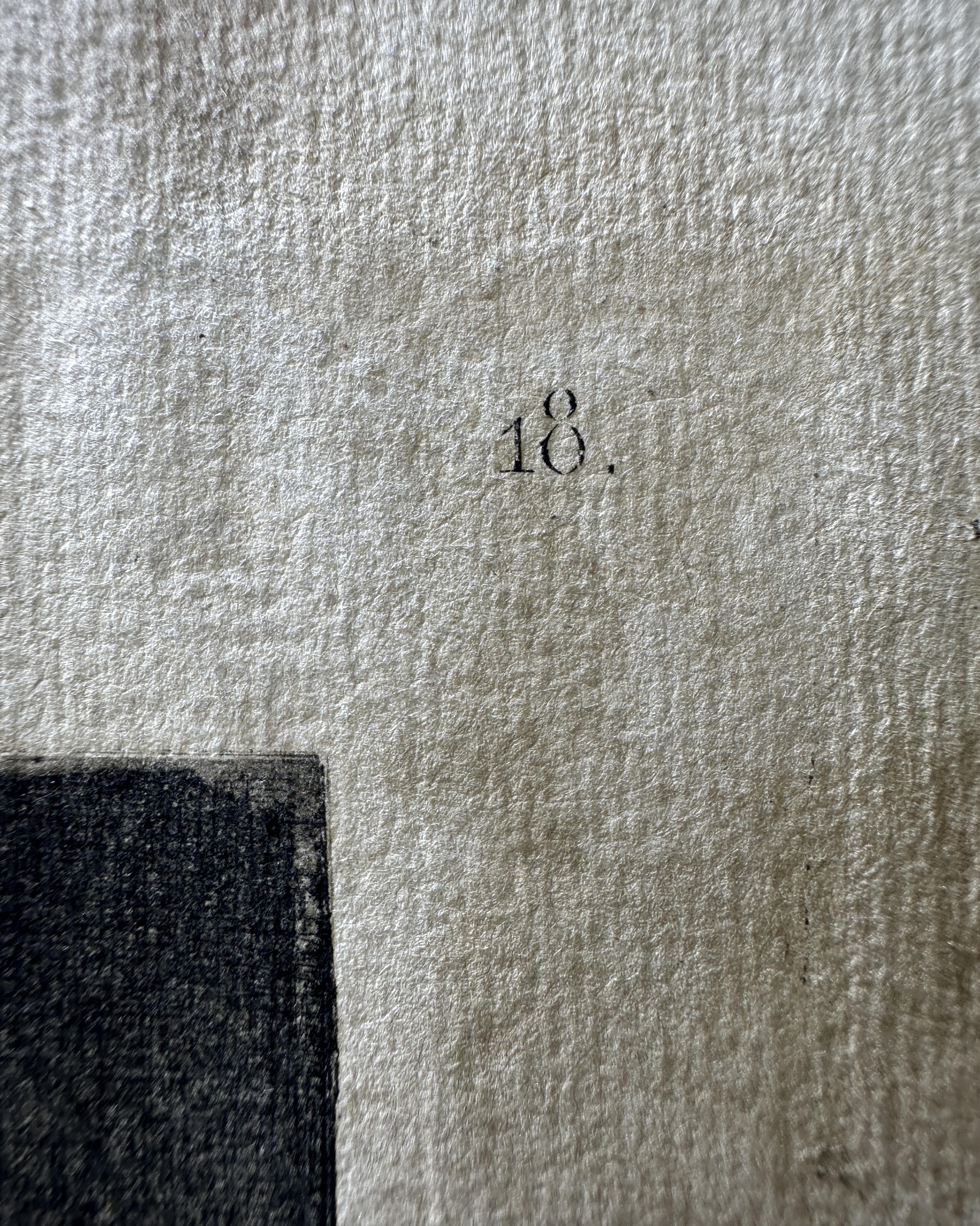
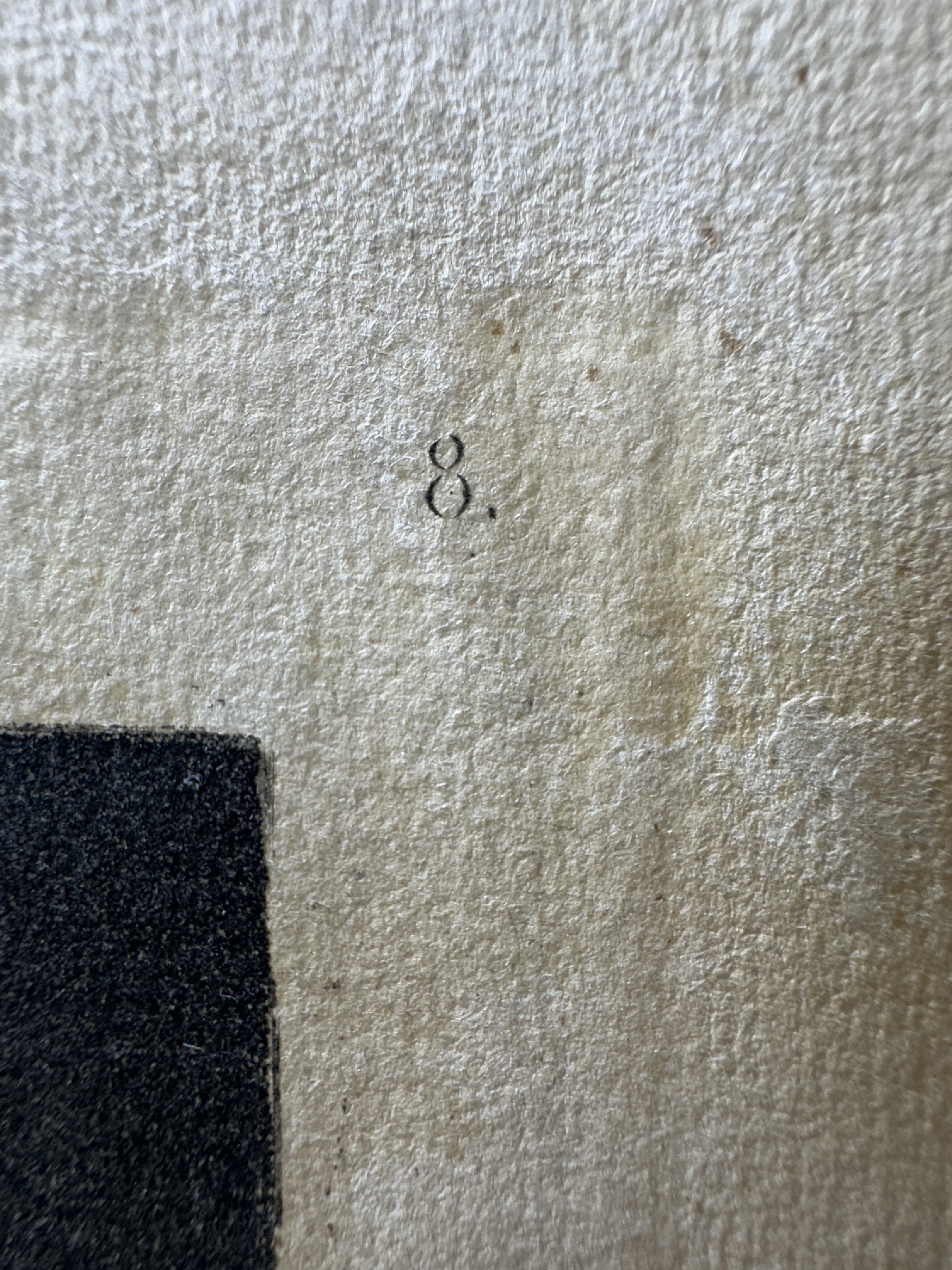
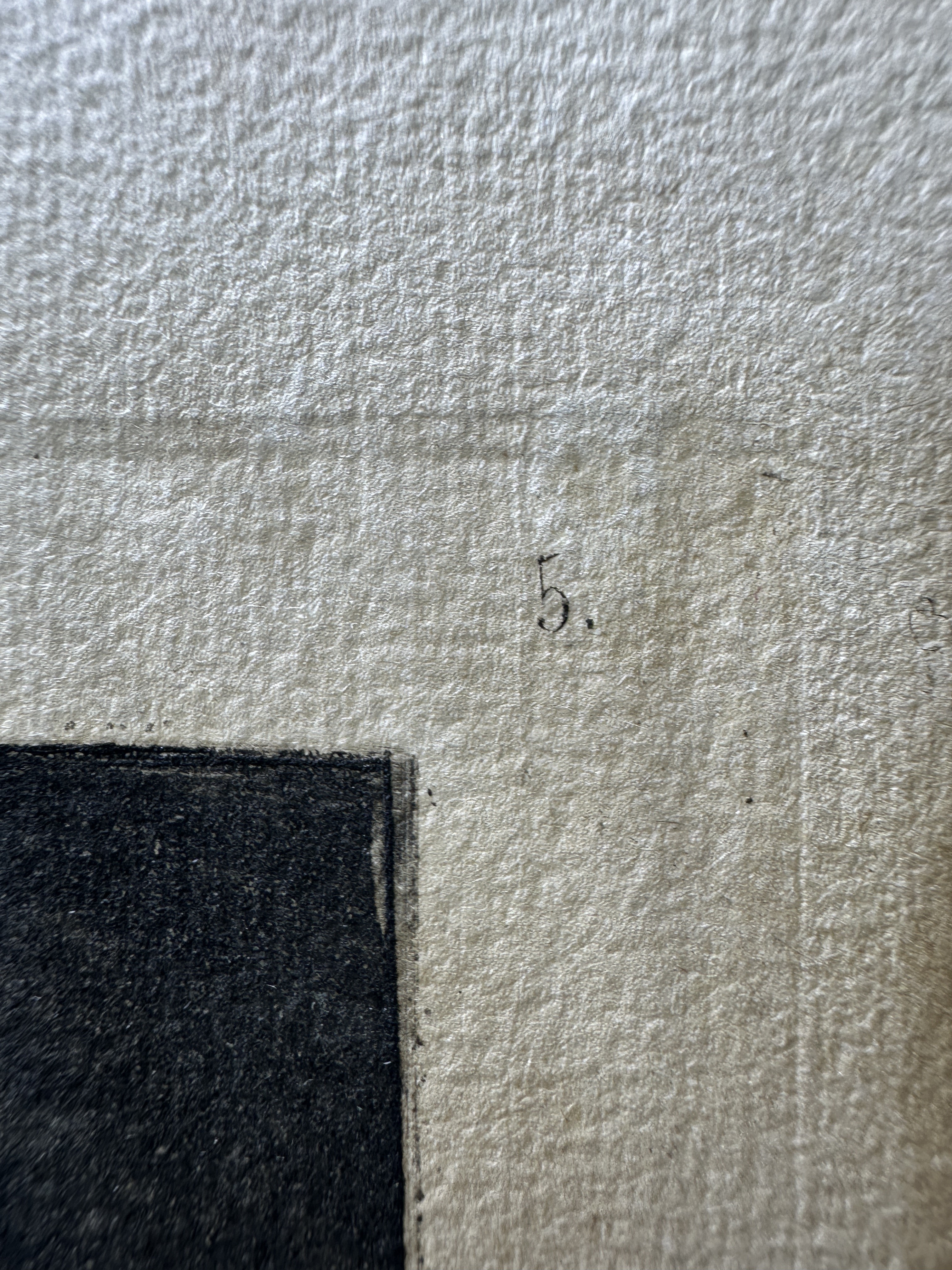
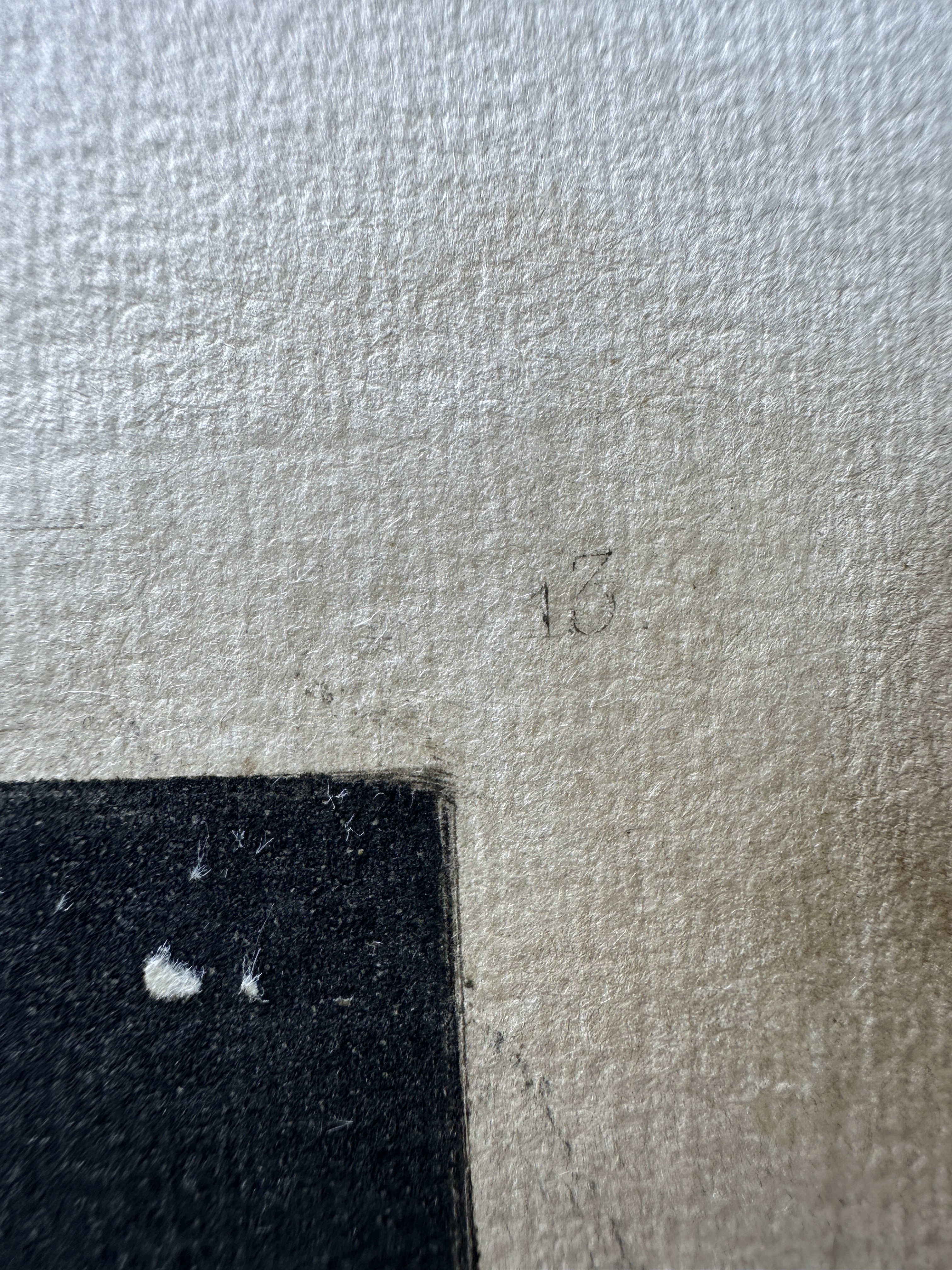
The presence of engraved numbering followed by a period (e.g., “18.”) is consistently documented in the upper right corner. The typography shows extraordinary incision sharpness, with no signs of "burr" (rebaba) or ink clogging (empastado). On the contrary, macroscopic observation reveals a visible intaglio relief within the numbers, indicating they were engraved with precision directly into the copper. The distance between the numbering and the edge of the composition remains constant across the series, constituting a diagnostic indicator of the 1864 Academic printing campaign.


Physical traceability of the series (provenance unity)
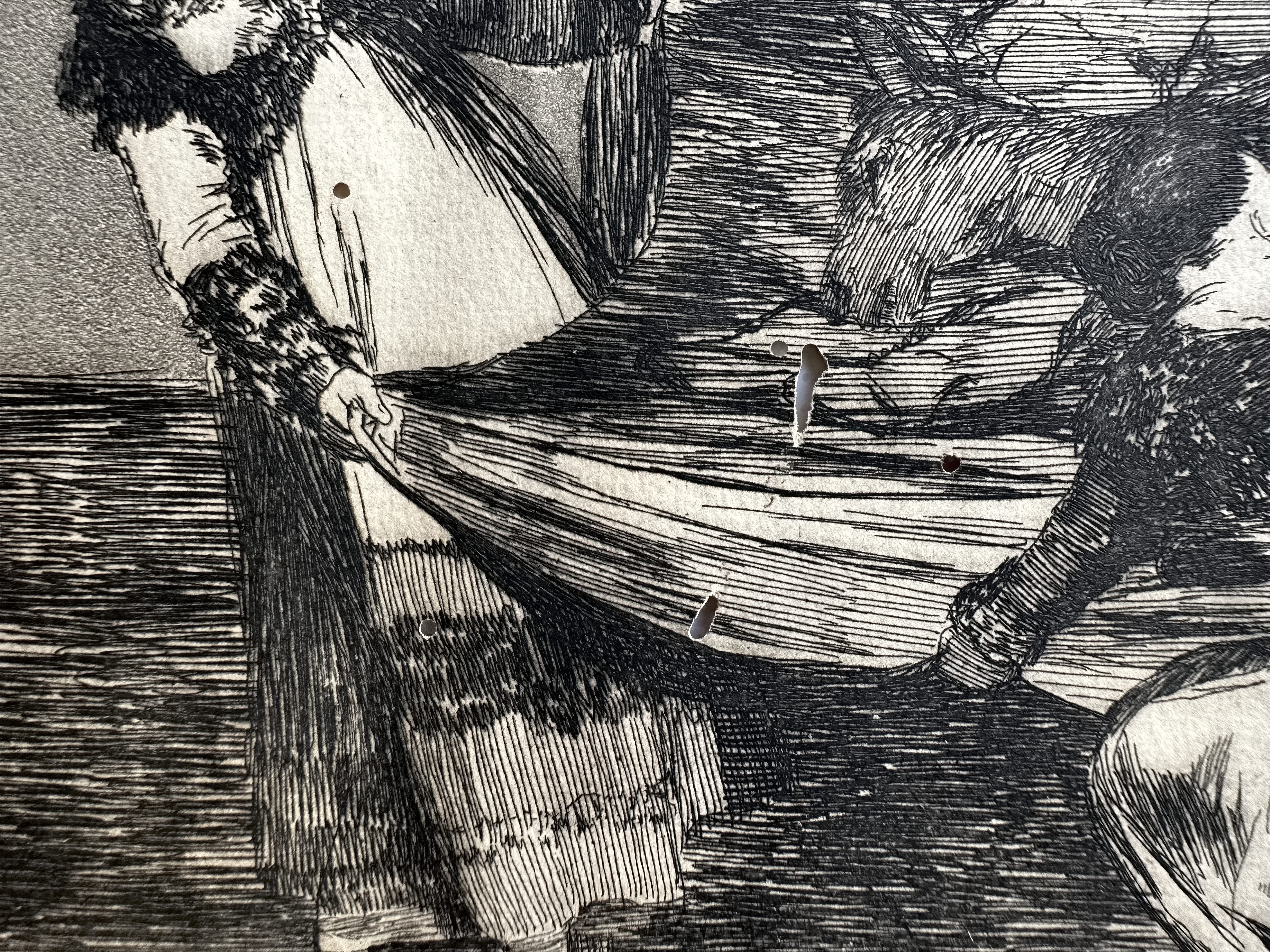
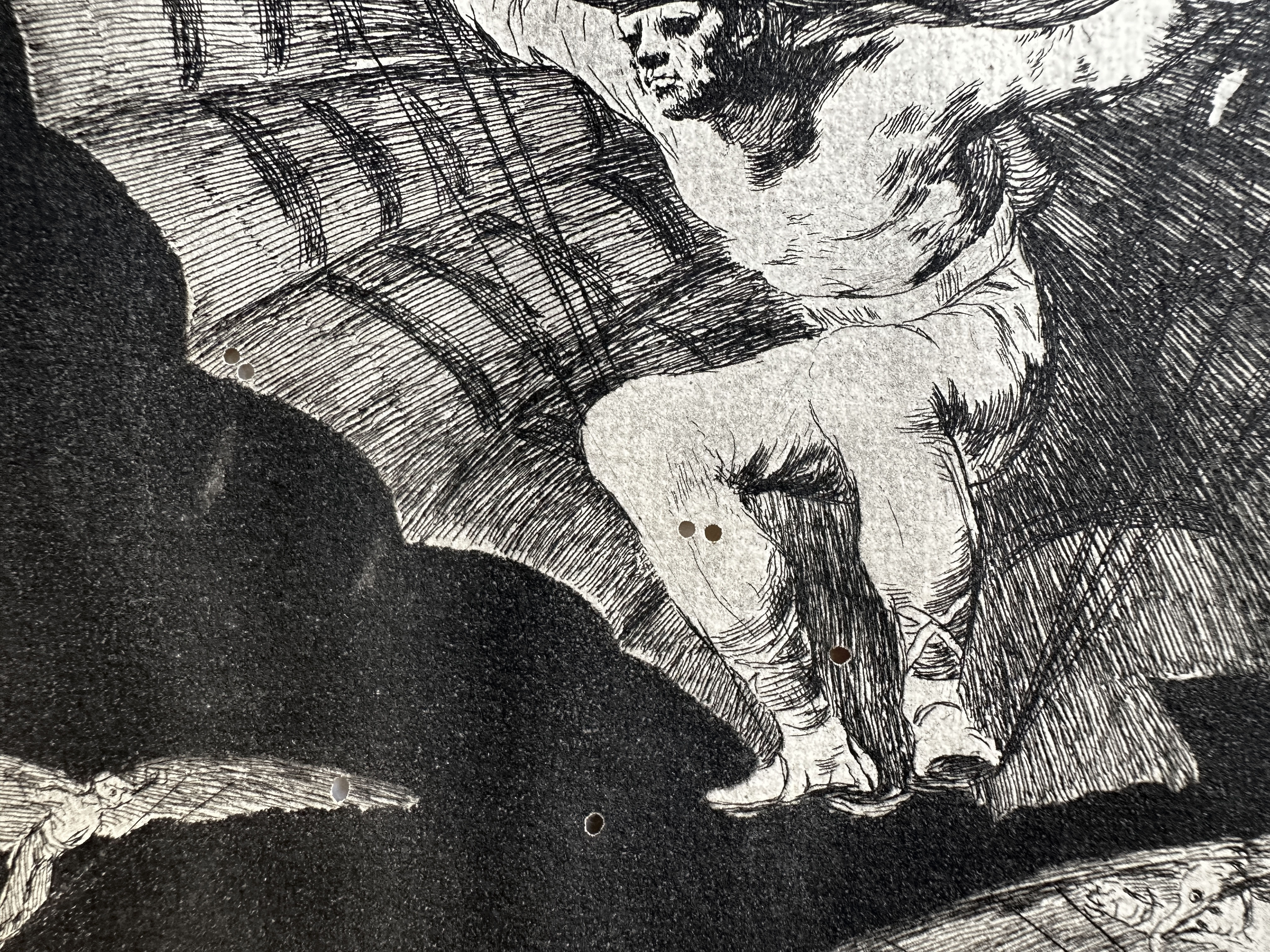
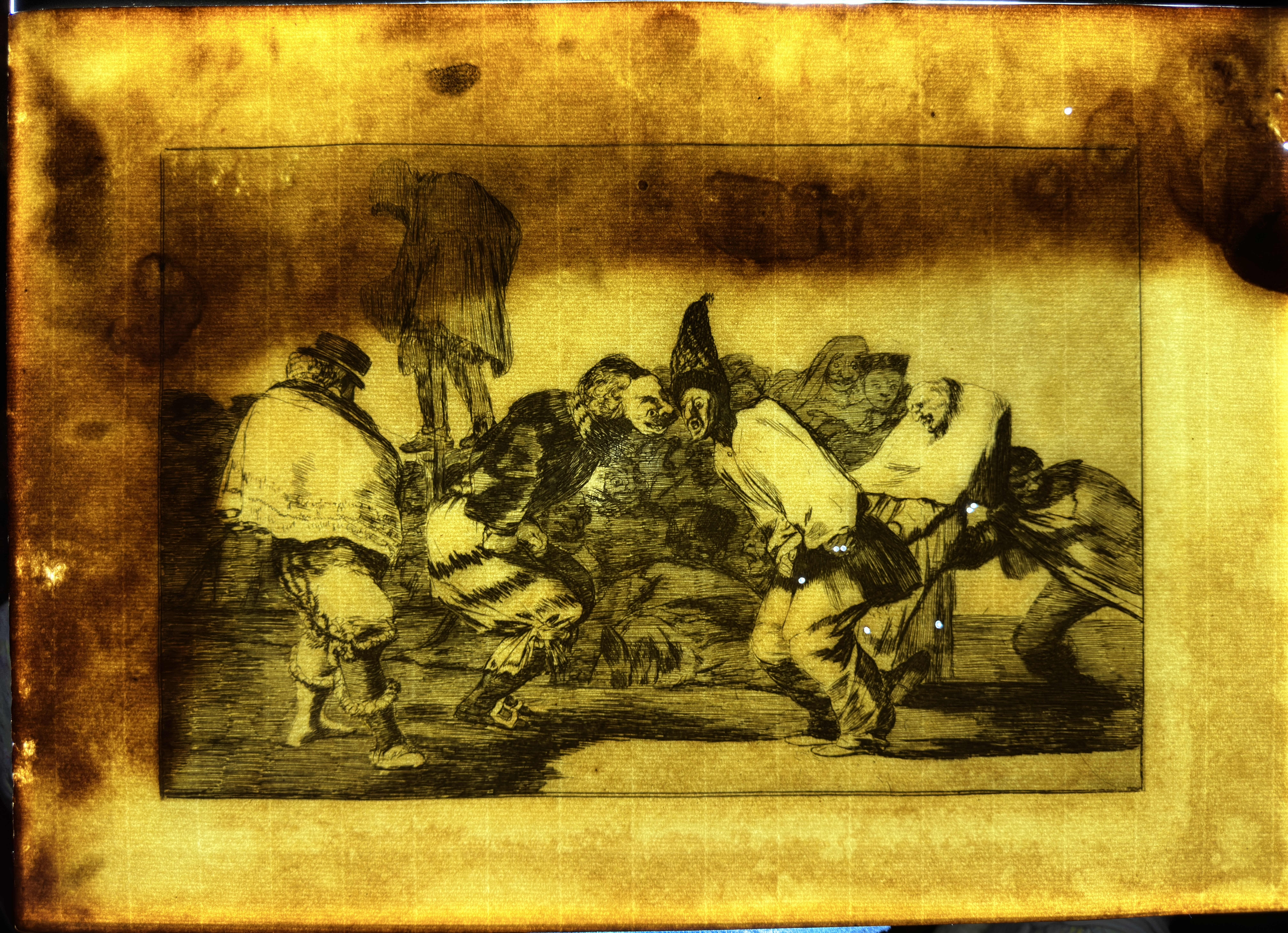
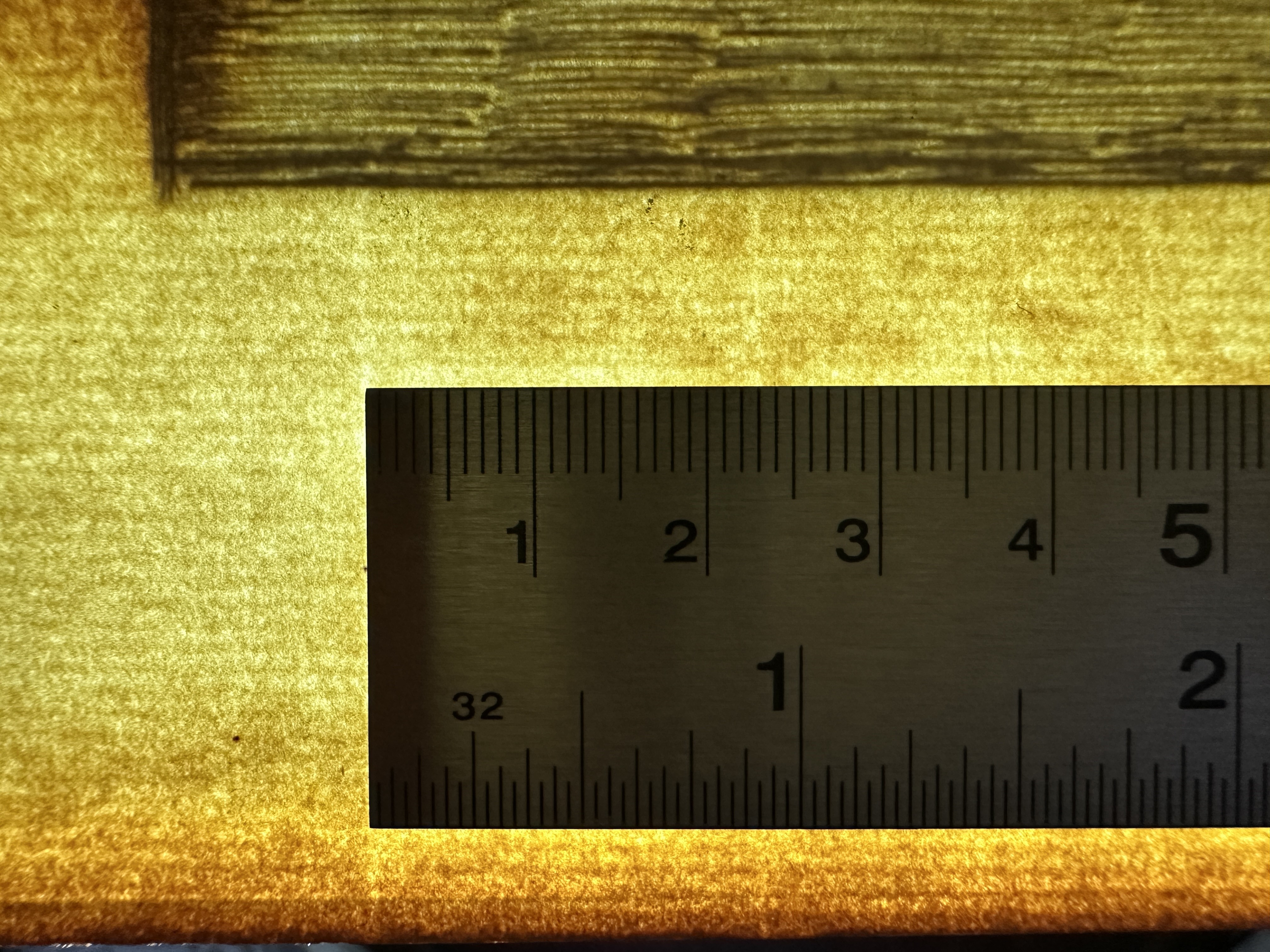
A total of seven biological perforation marks, each measuring approximately 1 mm in diameter (measured directly on calibrated macro images with visible scale), have been identified traversing the complete block of all 18 plates at identical spatial coordinates.
The perforations are circular, morphologically consistent, and attributable to historical insect activity. Their exact positional coincidence across the entire set constitutes direct forensic evidence that the plates remained physically united and stored together under identical environmental conditions for a prolonged period.


Paper support and "Transmitted Light" Analysis
Although the 18 sheets share identical overall paper dimensions, minor millimetric variations are observed in the platemark dimensions across the series.
These variations are fully consistent with manual chalcographic printing, reflecting natural fluctuations in sheet placement, pressure distribution, and paper response during printing.
The absence of trimming and the preservation of full margins confirm that these differences are intrinsic to the printing process and not the result of later intervention.
Chromatic and Ink Density Analysis
Ink Composition and Visual Tone
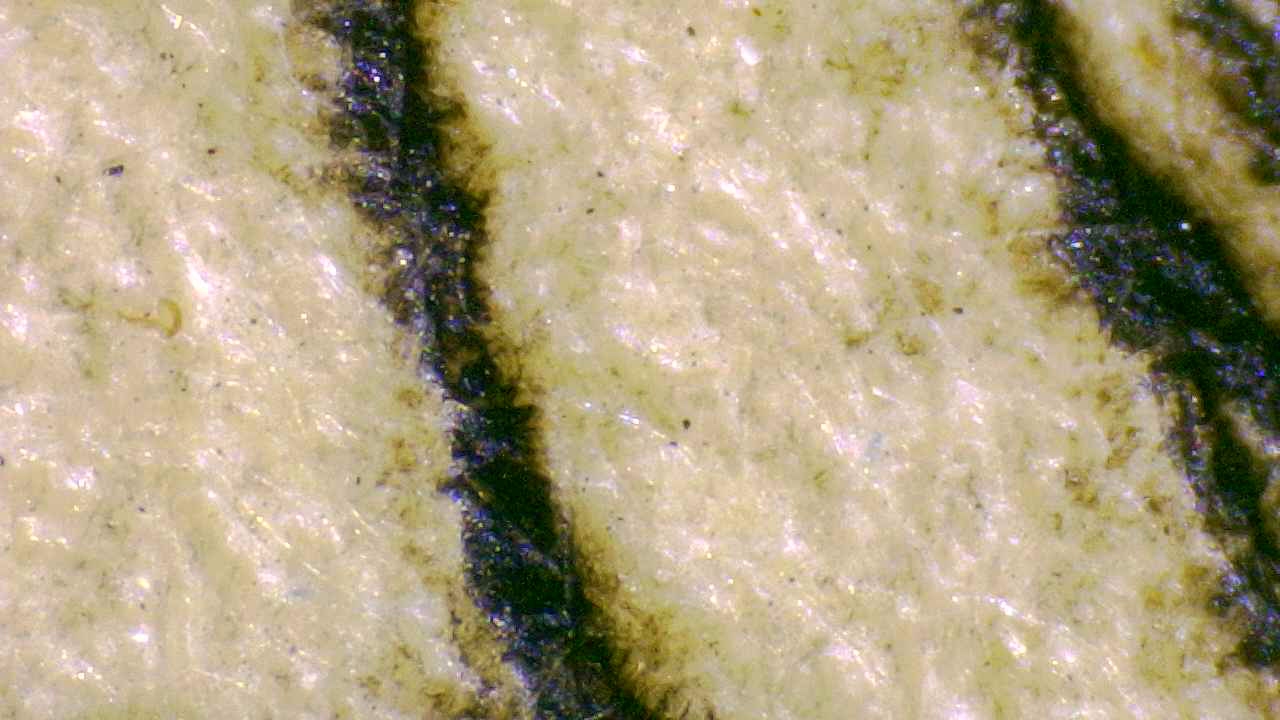
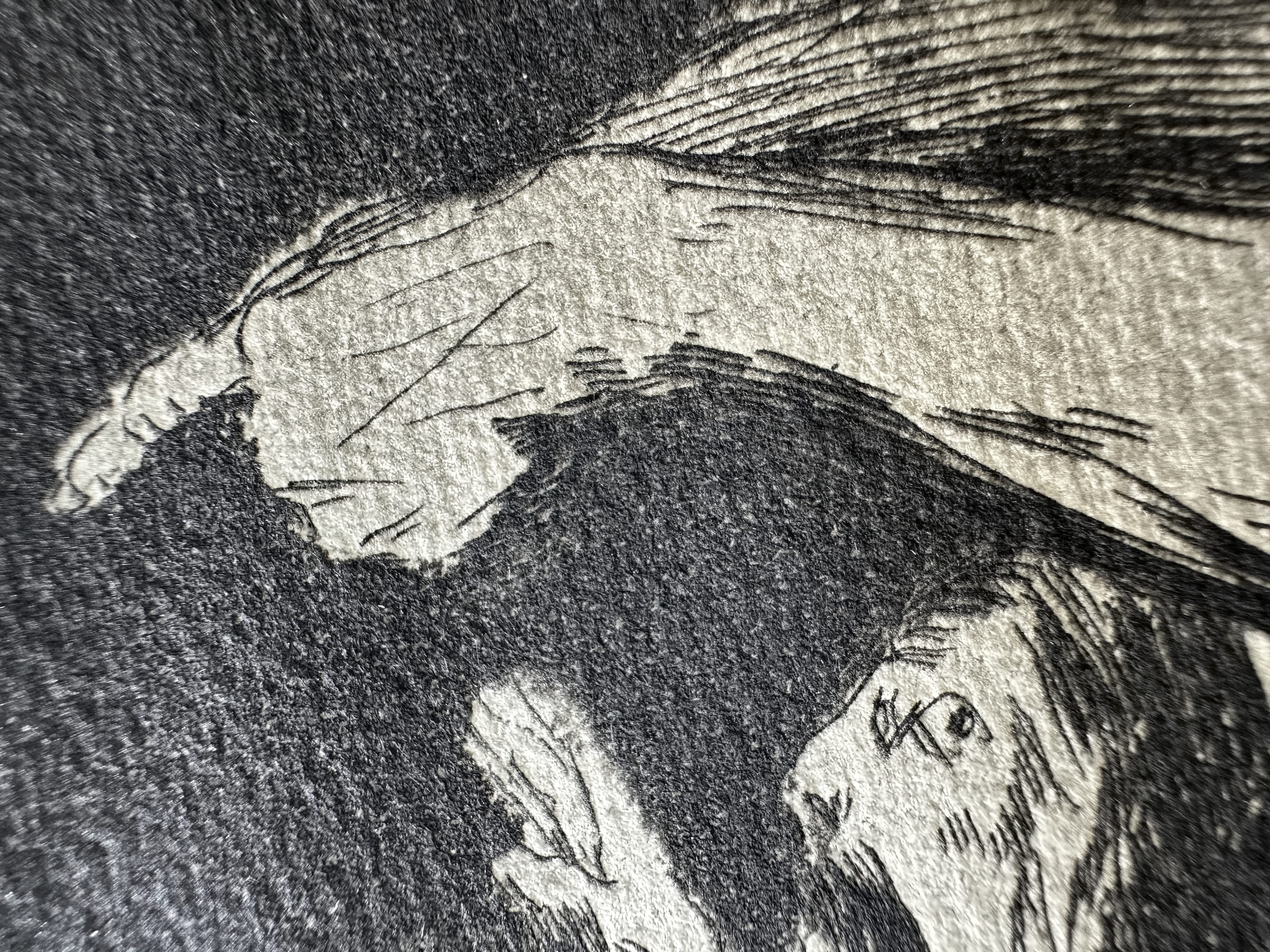
the entire set exhibits a consistent "warm black" pigment density, characteristic of the high-quality carbon-based inks used by the Calcografía Nacional in the mid-19th century. There are no chromatic shifts or variations in ink temperature between the plates, reinforcing the conclusion of a single, uninterrupted printing session.
Plate Cleaning and "Surface Tone"
The analysis reveals a deliberate and uniform "surface tone" (a thin film of ink left intentionally on the plate's surface). This technique, consistent across all 18 plates, provides the atmospheric depth and velvety shadows typical of early 1864 strikes, which are often lost in later, more "dryly" wiped editions.
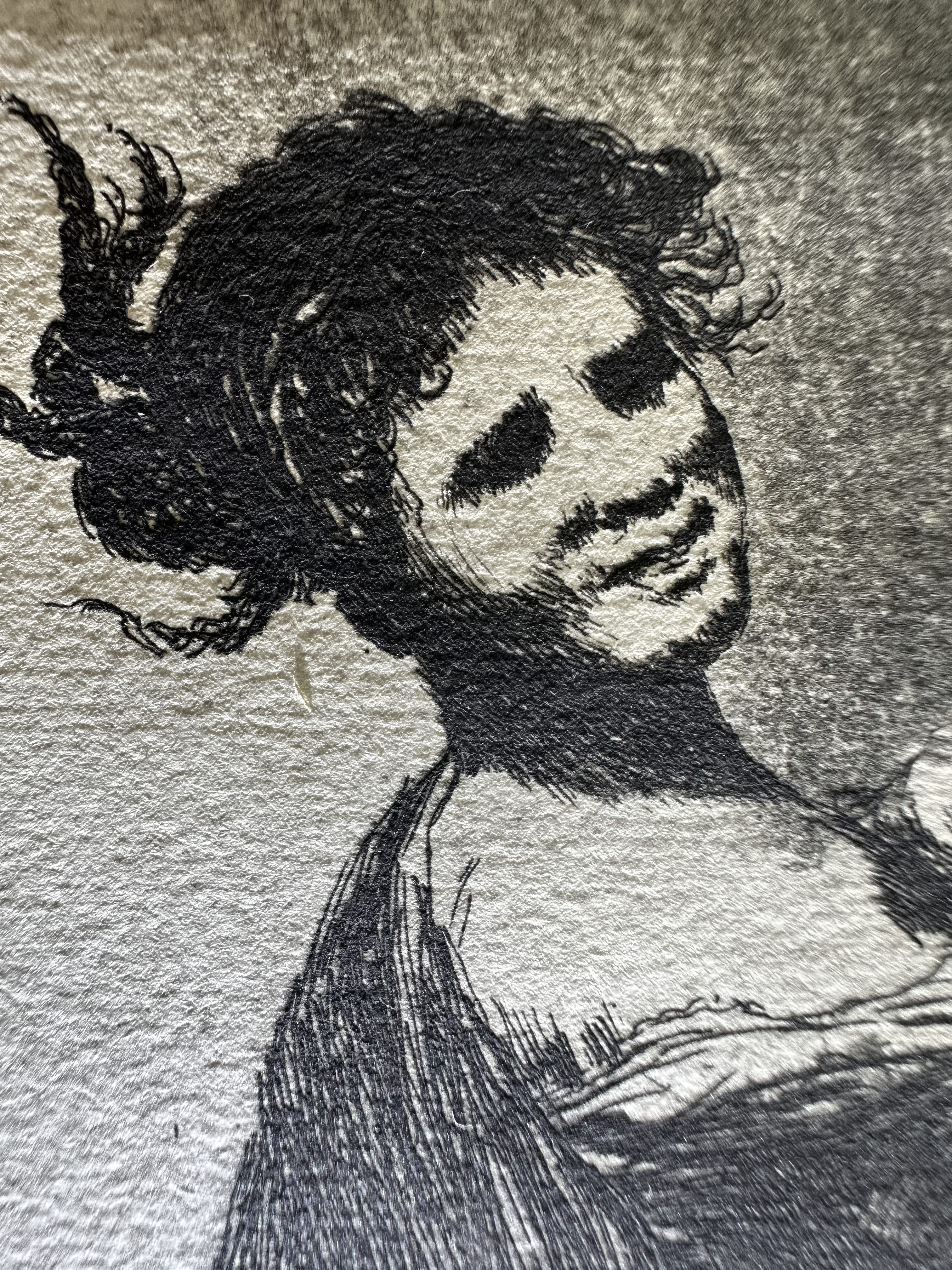
Technical Conclusion
The material evidence documented throughout this record establishes that the 18 plates form a single, coherent, and non-reassembled set.
Observed consistency in printing relief, engraved numbering, paper structure, and physical traceability confirms that the series was printed as a unified block during the same Academic printing campaign of 1864.
No indicators of later recomposition, mixed editions, or post-printing alteration were observed. The set remains materially stable and internally consistent across all examined parameters.
Provenance and History
The print was transmitted from generation to generation, remaining within the same family. Its state of preservation suggests minimal historical handling: it was stored for decades in a protected environment, away from direct light and damaging humidity fluctuations. It is likely that the print has been handled far less during the past one hundred years than during the recent technical examination conducted under microscopy, raking light, and transmitted-light watermark analysis.
This continuity of private custody—without recorded sales, auction appearances, or dealer interventions—helps explain the exceptional condition of the sheet and the survival of fragile physical features often lost in circulating impressions, including residual micro-relief, intact margins, and a preserved plate impression.
Provenance therefore supports attribution not only through lineage, but through material coherence: every aspect of the sheet’s condition aligns with an impression that has remained intact and undisturbed over time.
Bibliographic References and Standards
- Harris, Tomás. Goya: Engravings and Lithographs. Oxford: Bruno Cassirer, 1964. Ref: This is the definitive catalog raisonné used to identify the 1864 edition (Harris Vol. II, pp. 235-251) based on plate state and numbering.
- Delteil, Loÿs. Francisco Goya (Le Peintre Graveur Illustré, Vol. XIV & XV). Paris, 1922. Ref: Standard reference for the original sequence and plate dimensions of 'Los Disparates'.
- Calcografía Nacional de España. Catálogo de las estampas de Goya. Real Academia de Bellas Artes de San Fernando. Ref: Technical source for paper types and ink characteristics used in the 1864, 1875, and 1891 editions.
- Gasch, R. La técnica del grabado de Goya. Ref: Used for the comparative analysis of intaglio relief and plate wear (fatigue) indicators.
- International Foundation for Art Research (IFAR). Standard for Technical Examination of Works of Art on Paper. Ref: Methodological framework for the macrographic and transmitted light analysis used in this PVR.
Access and research collaboration
High-resolution files, complete macro-photography sets, and the internal technical dossier for the Álvarez impression of Los Disparates (Proverbs) are available to researchers upon request. Comparative video-microscopy sessions can also be arranged for institutions interested in examining in detail the physical features associated with early phases of plate use.
All observations presented on this page are based on direct examination of the private impression and on published images from institutional collections. Attribution, dating, and official terminology remain open to academic discussion and are offered here as a contribution to ongoing research on Francisco de Goya (1746–1828) prints.
For inquiries, image permissions, or collaborative research projects, please use the contact form on the main website or write to:
susana123.sd@gmail.com
fineartoldmasters9919@gmail.com
susana@alvarezart.info
Phone: +1 786 554 2925 / +1 305 690 2148
Álvarez Collection Verification Record # AC-FG-248-REV-2026